 Posted on 15 July 2026 by Mrs. Preeti Chhipa
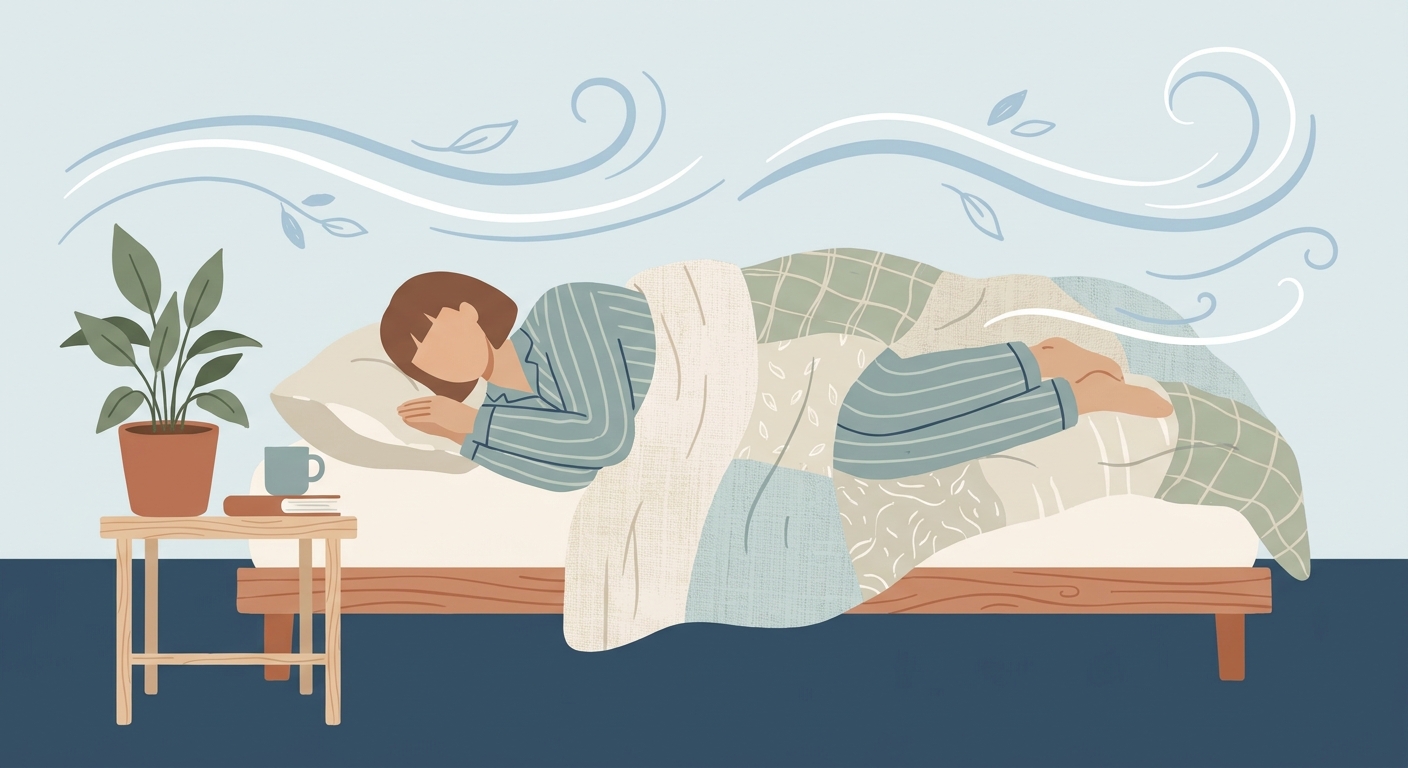
If you’re waking up at 3:00 AM, kicking off the duvet, and feeling like you just ran a marathon in your sleep, look at your pajamas. Seriously. Most "cooling" sleepwear on the shelves is a total marketing scam. It’s usually just polyester or nylon—essentially plastic wrap for your body. These synthetic nightmares trap heat against your skin, turning your bed into a sauna.
Stop shopping for what feels "silky" in the store for five seconds. Start shopping for what actually works for eight hours of rest. Switching to natural, biodegradable fibers isn’t just a "green" trend; it’s the only way to regulate your temperature and keep your sleep environment clean and breathable.
We obsess over high-thread-count linen sheets, yet we ignore the layer touching our skin. Synthetic pajamas are petroleum-based. They are hydrophobic, meaning they repel water. When your body naturally offloads heat and moisture at night, these fabrics trap that humidity against your pores. You end up stewing in your own sweat.
"Slow Sleepwear" is about choosing high-quality, natural fibers that actually work for you. These materials don’t just offer a fake cooling sensation; they manage moisture through structural absorption and evaporation. They breathe with you.
Breathability isn’t just a buzzword. It’s a physical process. Your body cools itself by sweating. A good fabric acts like a highway, moving that moisture away from your skin and into the air.
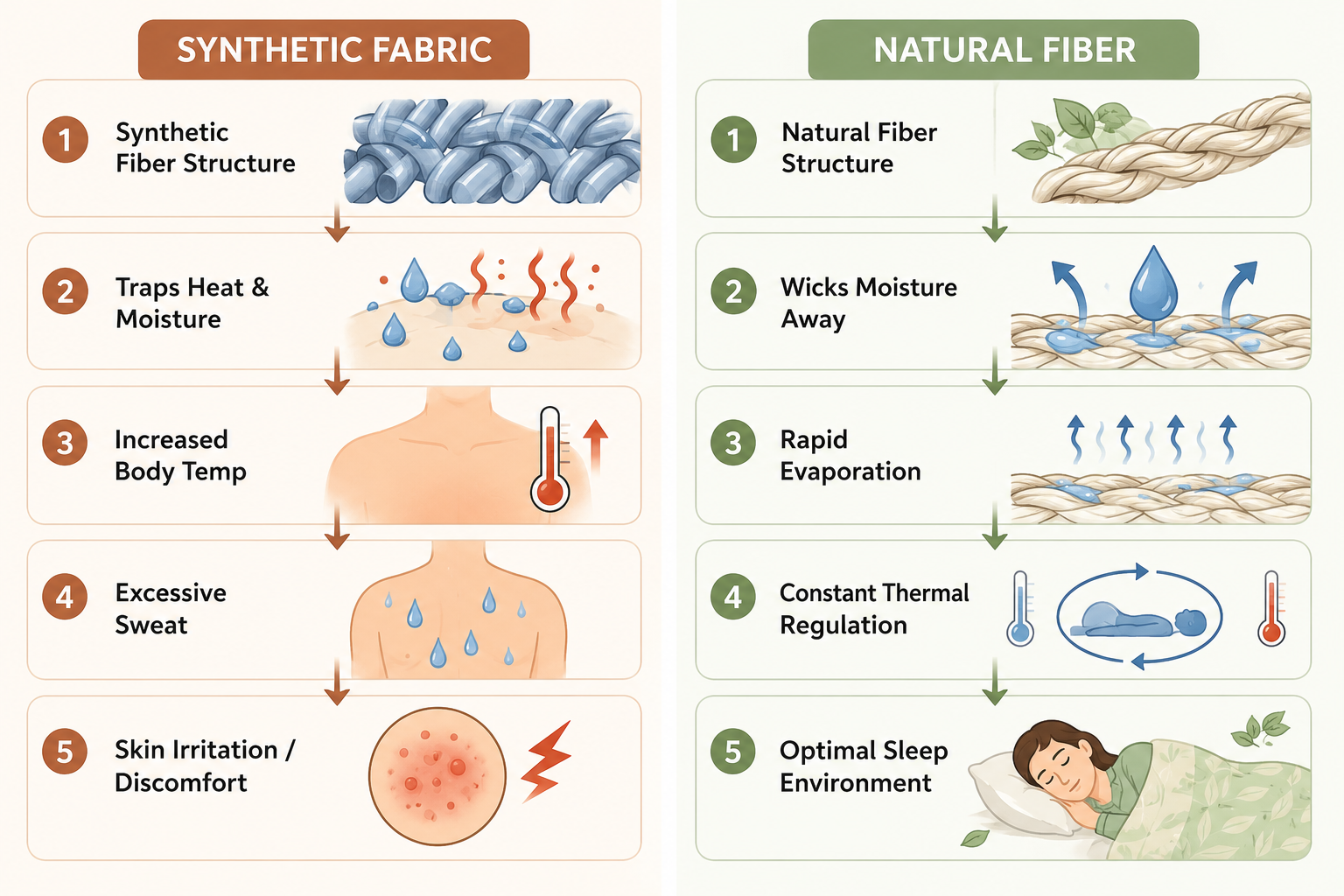
Synthetics fail here because they lack the molecular architecture to transport water vapor. Natural fibers act like a second skin, wicking sweat away and allowing it to evaporate. It’s the difference between wearing a rain jacket to bed and wearing a cotton t-shirt.
Linen is the heavyweight champion of summer sleep. Made from the flax plant, the fibers are thick, hollow, and incredibly strong. This structure allows air to move freely between the threads.
See that "crinkle" in high-quality linen? That’s a good thing. It means the fabric isn't clinging to your skin, creating tiny air pockets that ventilate your body. Linen is a sponge for perspiration, soaking it up without feeling damp, and it dries in a flash. If you’re a human furnace, start with linen.
If linen is the rugged outdoorsman, Tencel (specifically Lyocell) is silk’s more sustainable, high-tech cousin. It’s made from sustainably harvested wood pulp in a closed-loop system where the solvents are recycled. No waste, no mess.
Tencel is a beast at moisture management. Its microscopic fiber structure is smoother than cotton, making it a dream for sensitive skin. It absorbs moisture faster than cotton and releases it into the air just as quickly, so you never wake up feeling clammy. If you want something that bridges the gap between high-performance tech and pure luxury, check out our eco-friendly collection.
Hemp is the most misunderstood fabric in the game. People think "burlap sacks," but modern hemp-blend sleepwear is surprisingly soft and practically indestructible.
Environmentally? It’s a hero. It grows like a weed, requires almost no water, and needs zero pesticides. Because hemp fibers are hollow, they offer incredible thermal insulation—keeping you cool when it’s hot and cozy when it’s cold. Plus, the more you wash it, the softer it gets. If you want a pair of pajamas that will last a decade, buy hemp.
The debate between cotton and bamboo is messy. Conventional cotton is a water-guzzling, pesticide-heavy disaster. But, if you stick to GOTS-certified organic cotton—as defined by the Global Organic Textile Standard (GOTS)—you’re getting a cleaner, safer fiber grown without toxic junk.
Then there’s bamboo. It’s marketed as a miracle, but most "bamboo viscose" is essentially rayon, made using heavy chemical solvents. If you love the feel of bamboo, just make sure the brand uses a "closed-loop" manufacturing process that captures those chemicals. Don't fall for greenwashing; always look for the certifications.
You spend a third of your life in your pajamas. If they’re loaded with toxic flame retardants, formaldehyde, or harsh synthetic dyes, your skin—your largest organ—is soaking those chemicals up for eight hours a night.
This is why the OEKO-TEX Standard 100 certification is non-negotiable for me. This label means every button, thread, and dye has been tested for harmful substances. When you prioritize this, you aren't just buying clothes; you're building a chemical-free sanctuary.
Building a sleep wardrobe isn't about hoarding clothes. It’s about owning the right ones. Start with a core capsule: one set of linen for the heat, a Tencel set for year-round softness, and a hemp-blend piece for lounging.
| Fabric | Breathability | Softness | Durability | Environmental Impact |
|---|---|---|---|---|
| Linen | Exceptional | Moderate | High | Excellent |
| Tencel | High | Excellent | High | Excellent |
| Hemp | High | Moderate/High | Exceptional | Best in Class |
| Organic Cotton | Moderate | High | Moderate | Good |
Invest in quality, and you stop the endless cycle of buying "fast fashion" pajamas that fall apart in a month. You can see how we do it by checking out our sustainable manufacturing process.
"Slow Sleepwear" only works if you treat it with respect.
Greenwashing is everywhere. A brand might say "bamboo" to sound eco-friendly while ignoring their dirty, chemical-heavy factories. Before you pull out your credit card, use a site like Good On You to see if the brand actually cares about labor rights and the planet. Transparency matters.
Moving to sustainable, breathable sleepwear is a small switch with a massive payoff. Your sleep improves, your skin clears up, and your footprint shrinks. Sleep is a sacred, restorative act. Why spend it wrapped in plastic? Ditch the "cool-to-the-touch" marketing lies and embrace the honest, long-term comfort of nature.
Linen and Tencel are your best allies. Linen’s hollow fiber structure provides the best airflow, while Tencel is scientifically proven to manage moisture levels more efficiently than cotton, wicking sweat away from the body to facilitate rapid evaporation.
It depends entirely on the manufacturing process. If the bamboo is processed via a "closed-loop" system that recycles solvents, it is a highly sustainable choice. If it is produced using traditional "viscose" methods, it can be chemically intensive. Always check for third-party certifications to verify the brand's production claims.
Always wash in cold water using gentle, eco-friendly detergents. Never use fabric softeners, as they leave a wax-like coating that reduces the fabric's natural breathability. Finally, skip the dryer and air-dry your items to preserve the strength and softness of the natural fibers.
Synthetic "cooling" fabrics—often treated with chemical coatings—provide a temporary, artificial sensation of coolness but trap heat and moisture long-term. Natural fibers provide structural thermal regulation, meaning they work with your body's natural cooling processes to keep you dry and comfortable all night long.
Yes. Natural fibers like hemp and organic cotton have excellent thermal properties. They are "seasonless," meaning they are porous enough to allow airflow when it’s hot, but their natural density provides enough insulation to keep you cozy when the temperature drops.





Mrs. Preeti Chhipa
Fashion and traditional writer. She loves to write about women and men's fashion trends.