 Posted on 15 April 2026 by Mrs. Preeti Chhipa
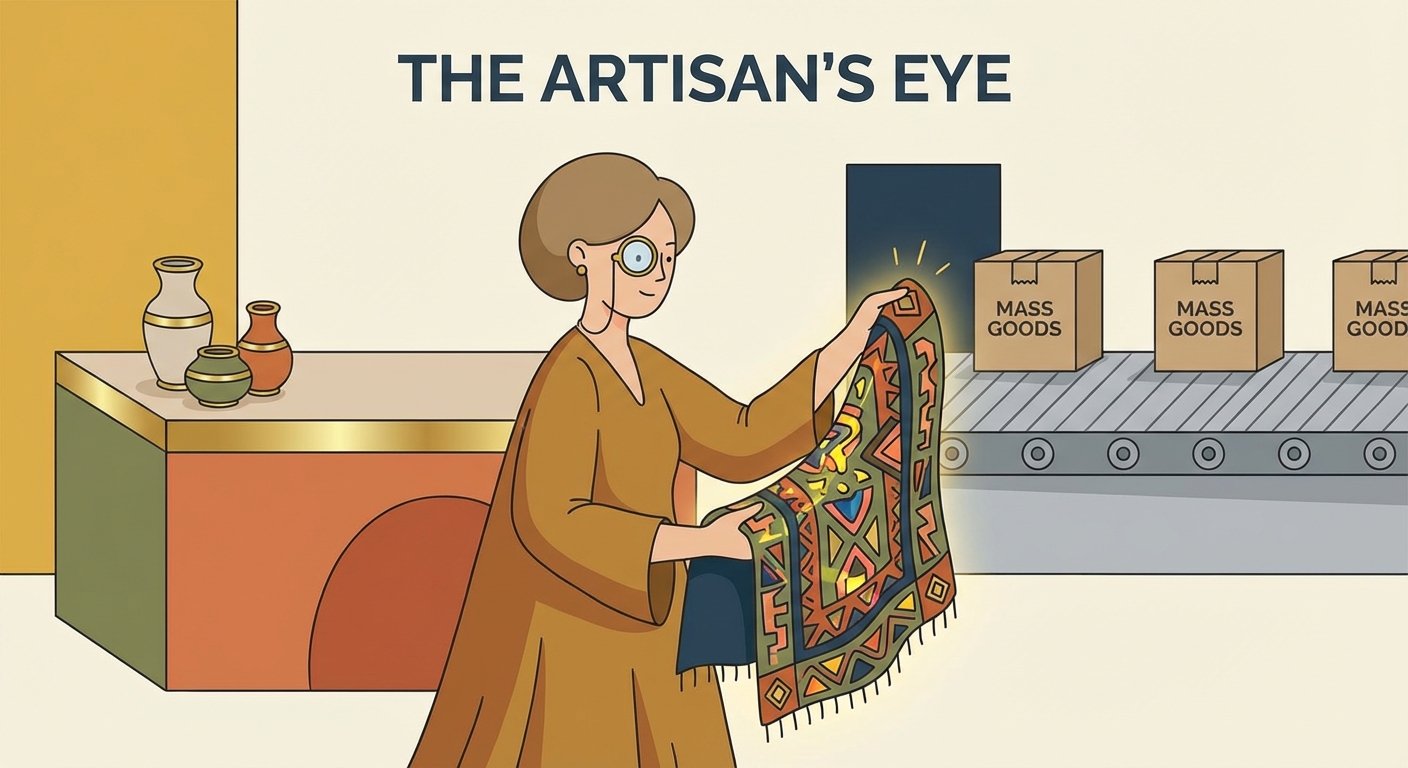
In 2026, a boutique isn’t just a shop. It’s a curator of living history.
The market is choking on "ethnic-style" prints cheap, mass-produced junk churned out by industrial printers that have all the soul of a spreadsheet. Smart shoppers are tired of the sterile, perfect, soulless aesthetic of fast fashion. They’re pivoting. They want "Slow Heritage." They want garments that actually pulse with the heartbeat of the person who made them.
If you want your boutique to survive the next five years, stop looking at your inventory as "units" or "SKUs." Start viewing them as vessels of cultural preservation. Authenticity is your only real competitive advantage now, but claiming it requires more than a marketing slogan. It demands a rigorous, obsessive commitment to where your goods actually come from.
The industry is currently drowning in digital replicas. These things mimic the visual language of traditional craft, but they’re hollow. A machine-printed motif might look "ethnic" from three feet away, but it lacks the depth, the slight, beautiful misalignments, and the textural narrative of a piece that actually touched human hands.
To protect your brand’s reputation, you need to master the "Human Touch" verification. Authentic hand-block prints always carry "imperfection markers." Look for the subtle overlaps where the wooden block met the fabric twice. Those aren’t mistakes; they’re the fingerprints of the artisan.
Flip the fabric over. Check the reverse side. If the dye hasn’t soaked through the fibers with the deep, uneven richness of a hand-applied process, you’re likely looking at a digital print. Natural dyes, too, have a distinct, earthy smell and a tactile weight that synthetic pigments just can’t fake.
The Authenticity Checklist for Boutique Buyers
- The Overlap Test: Keep an eye out for deliberate, slight misalignments in the pattern. Perfect symmetry is a hallmark of the machine, not the human hand.
- The Depth of Soak: Check the back of the fabric. Authentic hand-block prints show a clear "bleed" through the fibers; mass-produced prints often sit flat on the surface like a sticker.
- The Weave Inconsistency: Hand-loom fabrics have subtle, irregular variations in the density of the weave "slubs." These provide the character and airflow that factory power-looms kill.
- The Natural Dye Hue: Natural dyes live in an earthy, muted palette. If your colors are neon or unnaturally vibrant, they’re almost certainly synthetic.
There’s a constant, grinding tension between the romantic dream of direct sourcing and the cold, hard reality of logistics. Of course, the ideal is standing in an artisan cluster, watching dye vats simmer under the morning sun. But let’s be real that’s rarely scalable for a growing business.
This is where the "Middleman Gap" gets dangerous.
Direct sourcing offers the best connection, but it’s a minefield of language barriers, erratic timelines, and customs nightmares. On the flip side, relying on massive aggregators usually strips the soul out of the garment before it ever hits your shelf.
The winning strategy? Find the middle ground. Look for mid-tier agents or social enterprises that act as bridges, not just buffers. We break down our own approach to this delicate balance in our artisan sourcing philosophy. We prioritize long-term, human-to-human partnerships over one-off, transactional wholesale. When you’re vetting a new partner, ask one question: "Can you give me the name and location of the specific cluster that produced this batch?" If they can’t answer, they’re not a curator. They’re a reseller. Run.
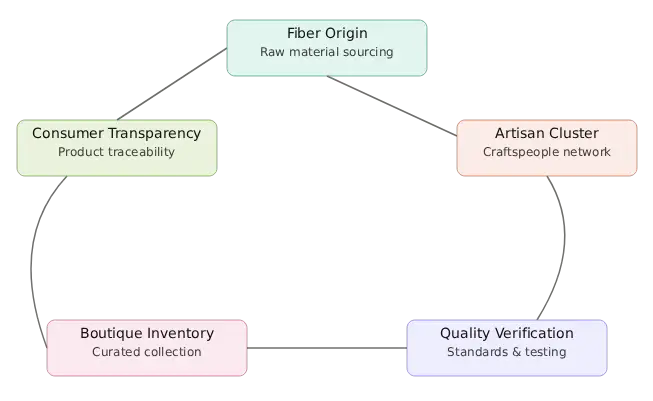
"Handmade" isn’t a gold standard anymore. It’s the baseline. The 2026 consumer expects a digital paper trail. As global regulations tighten around textile waste and supply chain ethics, your boutique needs a "Traceability Loop." You must be able to point to the origin of the fiber, the specific artisan cluster, and the proof of fair wages.
By integrating digital traceability like QR-coded hangtags that link directly to an artisan’s story you stop selling a product and start providing a verified experience. You can find essential frameworks for this shift through the Textile Exchange Sustainability Guidelines, which set the industry benchmark for responsible material sourcing.
Provenance marketing is simple: sell the story before you even show the product. When you shift from massive, seasonal inventory to micro-batch drops, you create an urgency rooted in genuine scarcity and craftsmanship.
Think about the history of Ajrakh. It’s not just a block-printed fabric. It’s a 16-step process of resist-dyeing, indigo, and madder root that takes weeks. When you tell that story, you aren’t selling a dress. You’re selling a piece of a centuries-old tradition. By using Blockart Collection as a reference for how to frame these narratives, you can justify premium price points that actually respect the labor involved. Your social currency is built on how deeply you understand and can translate the artisan’s world.
When you’re dealing with remote artisan clusters, formal "Fair Trade" certifications are often nonexistent. Why? Because the cost of those certifications is prohibitive for small, village-based cooperatives.
This puts the burden of due diligence on you. You have to be the auditor.
Use global benchmarks like the Good On You rating system to get a handle on the broader landscape, and cross-reference your suppliers with UNESCO’s Artisan Cluster Mapping to ensure you’re engaging with legitimate, traditional craft ecosystems. If you can’t visit in person, get on a video call with the workshop leads. Ask about their seasonal cycles and how they buy their raw materials. Ethical compliance is as much about building a relationship of mutual respect as it is about ticking boxes on a form.
Small-batch shipping is expensive. It’s more than bulk container freight, but that’s the price of exclusivity. To manage these costs without killing the customer experience, focus on "curated drops" rather than constant, mindless restocking. By grouping your orders, you can optimize freight costs while keeping the excitement of a limited-edition release alive.
When communicating with remote clusters, ditch the long emails. Use visual tools. Language barriers are best bridged by shared images, annotated sketches, and video walkthroughs of your quality requirements. Technology shouldn’t replace the artisan’s hand; it should serve as a conduit to make sure their vision reaches your boutique with its integrity intact.
Look for "imperfection markers" like pattern misalignments, uneven dye saturation on the reverse side of the fabric, and the presence of natural textural variations (slubs) in the weave. Machine-made items are typically too perfect, with pixel-sharp, repetitive motifs that lack the depth and organic quality of hand-applied dyes.
The biggest risk is the "gap" in quality control and communication. Without a local intermediary or a rigorous vetting process, you may find that the finished product does not match the prototype. This is why building long-term, transparent relationships rather than one-off wholesale transactions is essential for mitigating operational risk.
Shift the conversation from "cost" to "value." Educate your customers on the labor-intensive nature of the craft, the environmental benefits of natural dyes, and the direct impact their purchase has on preserving traditional livelihoods. When you shift the narrative from a commodity to an investment in heritage, the price point becomes secondary to the value of the story.
While third-party certifications like GOTS or Fair Trade are gold standards, they are often unavailable for small, village-level clusters. Instead, look for supply chain transparency, documentation of fair wage practices, and evidence of long-term partnership with the artisan community. Third-party audits are helpful, but direct verification of the supplier’s practices is often the most reliable method in the artisanal sector.




Mrs. Preeti Chhipa
Fashion and traditional writer. She loves to write about women and men's fashion trends.