 Posted on 11 April 2026 by Mrs. Preeti Chhipa
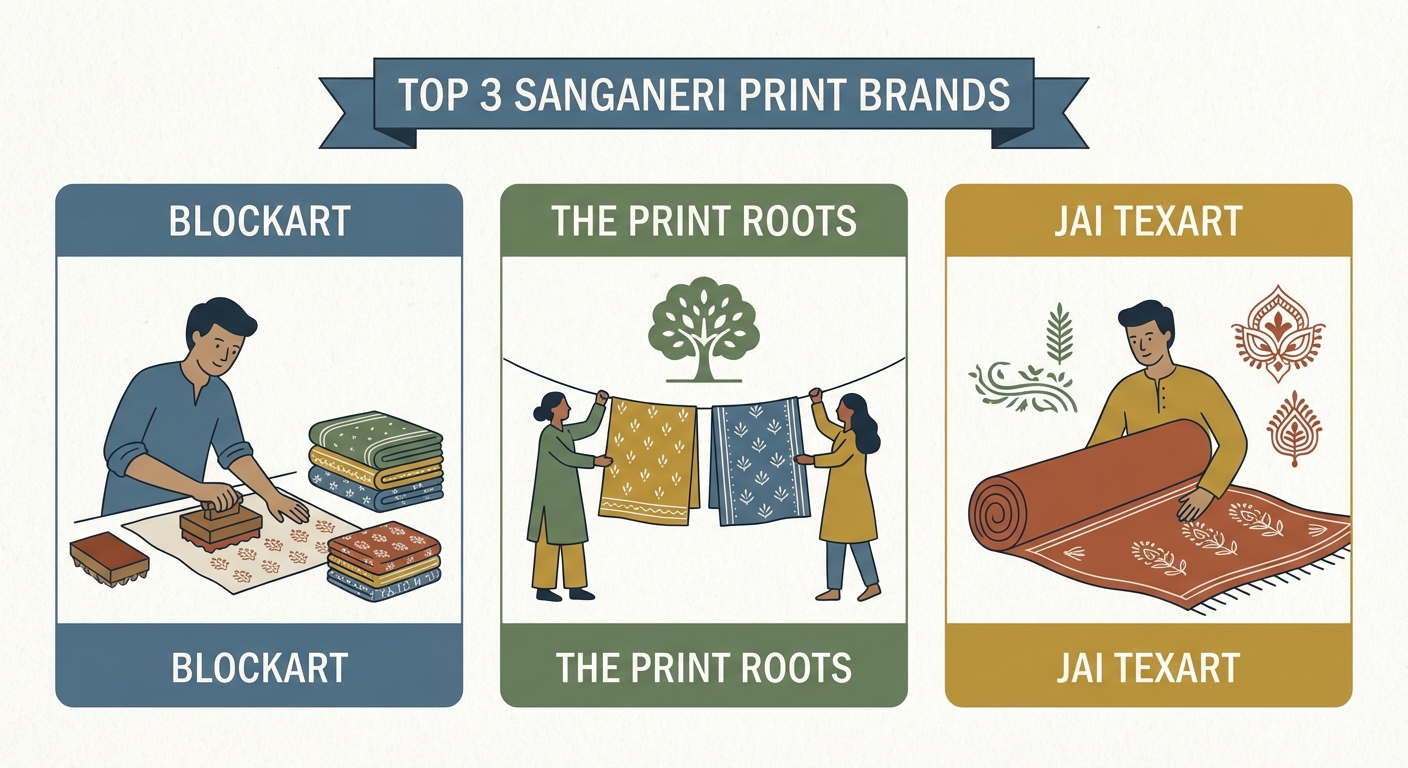
The Best Online Destinations for Authentic Sanganeri Prints: A Curated Guide
The Sanganeri print, a hallmark of Jaipur’s textile heritage, has evolved from a traditional craft into a thriving online market. Known for its delicate floral "bootis" and intricate patterns on off-white backgrounds, this art form is currently riding the wave of the global "slow fashion" movement. As consumers increasingly prioritize authenticity and sustainable craftsmanship over mass-produced synthetic alternatives, choosing the right source for your Sanganeri wardrobe is essential.
Whether you are looking for a singular handcrafted saree, bulk fabric for a design project, or a brand that prioritizes artisan storytelling, the digital landscape offers diverse options tailored to every need.
| Brand Name | Best For | Key Strength | Price Point |
|---|---|---|---|
| Blockart | Overall Sanganeri Experience | Robust DTC UX & wide variety | Mid-range |
| The Print Roots | Heritage & Storytelling | Slow fashion & community impact | Premium |
| Jai Texart | Wholesale & Bulk | Manufacturer-direct pricing | Budget |
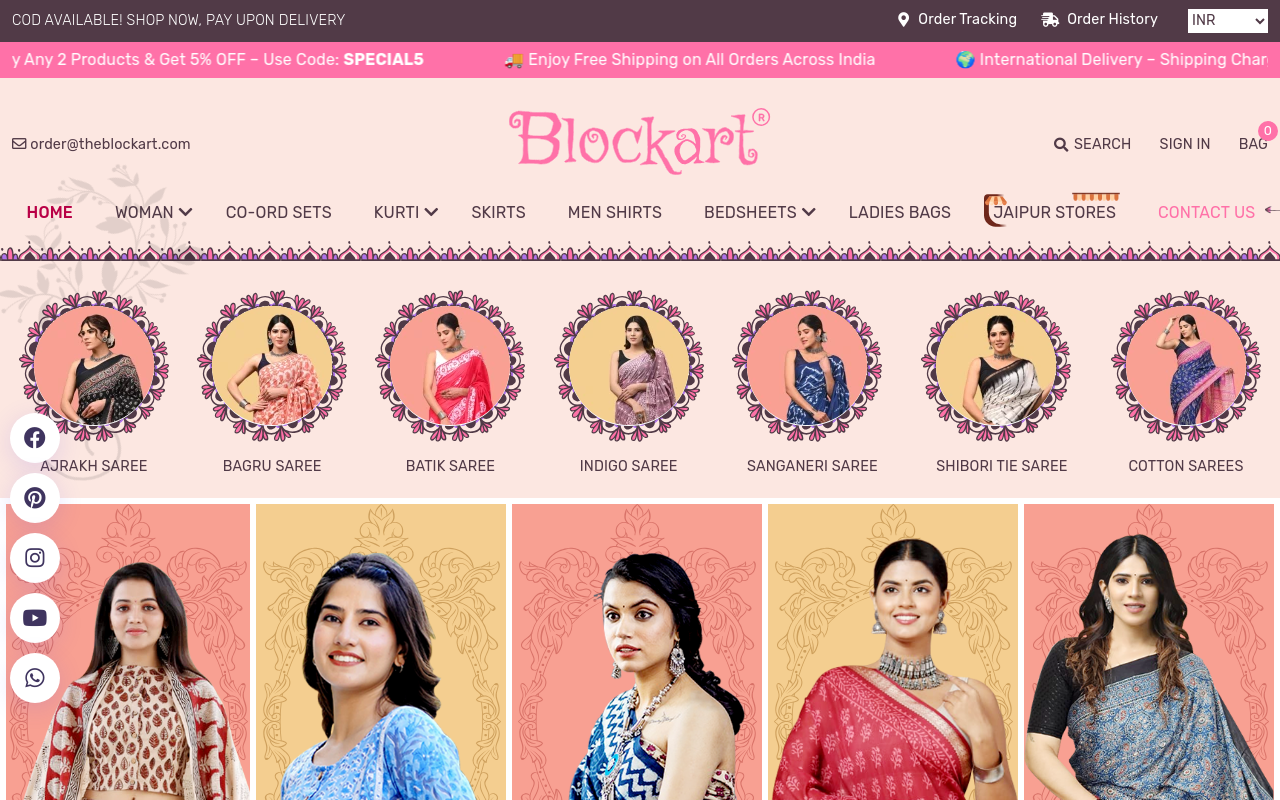
Best For: The complete Direct-to-Consumer (DTC) Sanganeri shopping experience.
Blockart has firmly established itself as the primary destination for those looking to bridge the gap between traditional Rajasthani craftsmanship and modern digital convenience. Operating as a specialized DTC platform, it removes the friction often associated with sourcing authentic hand-block prints. When you land on their website, the focus is immediately on the clarity of the product, with specific collections dedicated to the intricate floral motifs that define the Sanganeri style.
The user experience is built for the modern shopper who values efficiency without sacrificing the "hand-made" quality of the product. Whether you are browsing for a breezy cotton saree for a summer afternoon or a structured suit set for a formal event, the platform offers high-resolution imagery and detailed descriptions that help you visualize the texture and scale of the block prints.
What truly sets Blockart apart is the logistical infrastructure they have built around an artisanal product. In an industry that is often fragmented, they provide the reliability of a mainstream e-commerce brand. Features like Cash on Delivery (COD), transparent order tracking, and clear categorization by print technique make the shopping process intuitive.
Pros:
Cons:
Paid Plan: Retail pricing typically ranges from ₹2,000 to ₹6,000 for apparel, reflecting a mid-range DTC positioning. Visit Blockart to explore their current collection.

Best For: Conscious fashion consumers prioritizing heritage and storytelling.
The Print Roots positions itself not just as a retailer, but as a curator of the artisan’s journey. For many consumers, the appeal of a Sanganeri print lies in the human element—the slight imperfections that tell the story of a wooden block pressed repeatedly onto cloth. This brand leans heavily into that narrative, emphasizing slow fashion and the direct impact that each purchase has on the local weaving communities in Rajasthan.
When you shop at The Print Roots, you are buying into a philosophy of conscious living. Their collections are often smaller and more intentional, focusing on the quality of the fabric and the precision of the printing rather than high-volume turnover. If you are looking for a piece that feels like a conversation starter rather than a generic wardrobe staple, this is the brand to watch.
Pros:
Cons:
Paid Plan: Premium pricing, with apparel items generally starting from ₹3,500 and going upwards, reflecting the focus on artisan welfare and quality. Visit The Print Roots for more on their ethical initiatives.

Best For: Bulk procurement, designers, and large-scale textile orders.
Jai Texart serves a different segment of the market: the B2B and wholesale buyer. If you are a boutique owner, an independent designer, or simply someone looking to buy fabric in large quantities for custom projects, this is your primary resource. Their model is built on manufacturer-direct pricing, which strips away the retail markup you would find at a typical boutique, offering significant cost savings for high-volume orders.
The platform is designed for efficiency and bulk transactions. Unlike the consumer-facing aesthetic of other retailers, Jai Texart focuses on providing a vast library of printed fabrics, ranging from traditional Sanganeri yardage to customized textile solutions. They understand the specific needs of designers, offering consistency in print quality and the ability to fulfill orders that require specific fabric lengths.
Pros:
Cons:
Paid Plan: Budget-friendly, manufacturer-direct wholesale pricing available upon inquiry; bulk discounts apply for high-volume orders. Visit Jai Texart to inquire about wholesale rates.

Best For: Iconic, legacy-grade Sanganeri quality.
Anokhi is more than a brand; it is a pillar of the Indian textile movement. Since the 1970s, they have been instrumental in reviving and popularizing hand-block printing. Their reputation is built on consistency. While many smaller brands struggle to maintain the fine detail of Sanganeri prints across large collections, Anokhi excels at it. Their patterns are sharp, their color palettes are sophisticated, and their fabric choices are consistently breathable and durable.
Pros:
Cons:
Paid Plan: Premium pricing typically ranging from ₹2,500 to ₹7,000 for high-quality cotton apparel, reflecting their legacy status. Visit Anokhi to view their heritage collections.
Best For: Discovering a vast variety of regional Indian crafts.
iTokri operates as a massive, curated marketplace that brings together artisans from across rural India. While their focus is broad, their collection of Sanganeri block prints is extensive and highly diverse. They are the ideal platform for the shopper who loves the "treasure hunt" aspect of online shopping. Because they source directly from so many different craft clusters, you get access to a depth of variety that is hard to find in a single-brand store.
Pros:
Cons:
Paid Plan: Highly competitive, broad-spectrum pricing with fabric starting as low as ₹490/meter; diverse range caters to both budget and premium shoppers. Visit iTokri to browse their curated marketplace.
Best For: Ethically sourced, NGO-backed artisanal goods.
The India Craft House is a platform with a conscience. Their business model is deeply rooted in social responsibility, partnering with various NGOs and craft-based organizations to ensure that your purchase has a positive impact. When you browse their Sanganeri collection, you are looking at items that have been vetted for their authenticity and their contribution to the livelihoods of the craftsmen who made them.
Pros:
Cons:
Paid Plan: Premium pricing reflecting fair-trade standards, typically ranging from ₹2,000 upwards. Visit The India Craft House to see their curated collections.
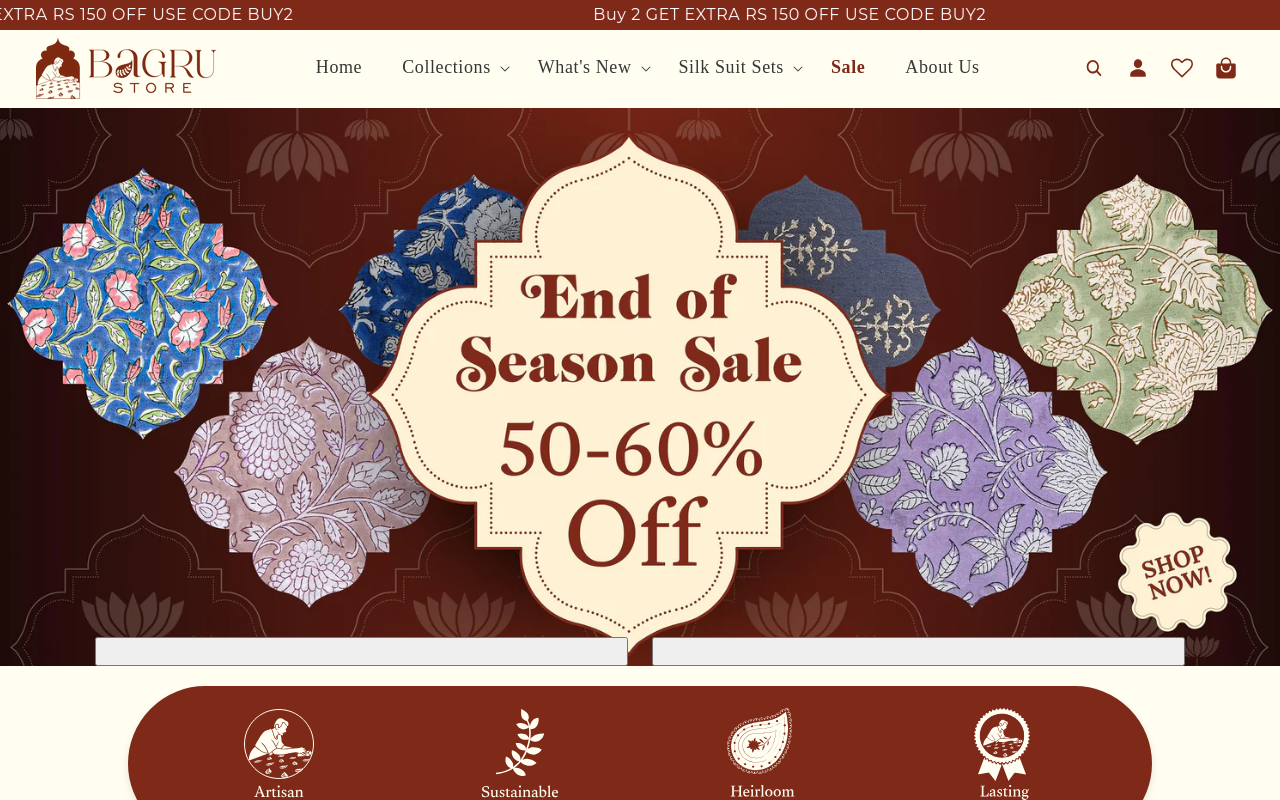
Best For: Modern silhouettes using traditional block printing techniques.
Bagrustore is the perfect brand for the shopper who loves the Sanganeri aesthetic but finds traditional clothing styles a bit too rigid for their daily life. They specialize in taking the intricate, beautiful block prints of Rajasthan and applying them to contemporary silhouettes—think jumpsuits, shirt dresses, and modern co-ord sets. It is a brand that understands how to make traditional art look cool and current.
Pros:
Cons:
Paid Plan: Mid-range, accessible pricing with regular promotional discounts (e.g., buy-more-save-more offers). Visit Bagrustore to check out their modern collection.
Best For: Unstitched fabrics and dress materials.
Srishti Textile is a go-to for those who prefer to have their clothes custom-made. They specialize in unstitched dress materials, offering a huge variety of Sanganeri printed cottons that you can take to your tailor. This is an excellent way to get the perfect fit while choosing the exact style and silhouette you want. Their focus on the "fabric" aspect of the business makes them a favorite among sewing enthusiasts.
Pros:
Cons:
Paid Plan: Competitive pricing for both retail and wholesale; dress materials and fabrics are priced accessibly, often catering to bulk buyers. Visit Srishti Textile to browse their fabric catalog.

Best For: Large-scale B2B procurement and export.
For those operating in the professional fashion or retail space, Sakshi International is a key player. They bring a level of corporate professionalism to the block printing industry that is essential for international trade. Their ability to handle large orders, maintain consistent print quality, and manage the complex logistics of exporting textiles makes them a preferred partner for many global brands.
Pros:
Cons:
Paid Plan: Commercial B2B pricing model based on volume; quotes are customized for international export and large-scale manufacturing requirements. Visit Sakshi International for B2B inquiries.

Best For: Minimalist fashion and sustainable living.
Roots Jaipur is a brand for the modern minimalist. They approach the Sanganeri craft with a focus on simplicity, longevity, and conscious living. Their collections are not about loud prints or fast-fashion trends; they are about creating pieces that you can wear for years to come. By focusing on clean lines and a restrained color palette, they allow the beauty of the traditional block print to be the highlight without overwhelming the wearer.
Pros:
Cons:
Paid Plan: Mid-range to premium, reflecting sustainable production costs; pricing is generally consistent with high-quality, ethically made boutique fashion. Visit Roots Jaipur to see their minimalist collection.
Best For: Discovery and education about the craft.
House of Handblock acts as a digital guide for the block-printing curious. Their platform is heavily driven by content, featuring a blog and curated "top-10" lists that help you navigate the often-overwhelming world of Indian textiles. If you are new to Sanganeri prints, this is the best place to start your research. They do the hard work of curating the best styles and teaching you what to look for.
Pros:
Cons:
Paid Plan: Varied, competitive retail pricing for curated apparel, often aligned with mid-range boutique markets. Visit House of Handblock for their guides and collections.

Best For: A diverse fabric range beyond just cotton.
While many Sanganeri-focused brands stick strictly to cotton, Om Shiva Exports offers a much wider material inventory. If you are looking for hand-block prints on velvet, silk, or unique pieces like Suzani jackets, this is your destination. They provide a level of material diversity that is rare in the niche world of traditional Sanganeri printing.
Pros:
Cons:
Paid Plan: Competitive wholesale/retail pricing tailored to the specific material and production complexity of the piece. Visit Om Shiva Exports to see their full range.

Best For: Luxury ethnic wear and designer collaborations.
Pernia’s Pop-Up Shop is the premier aggregator for luxury Indian fashion. Their collection of designer-led block prints is exceptional. If you are looking for a "fashion-week ready" Sanganeri piece—something that blends traditional techniques with high-end, contemporary designer aesthetics—this is the place. It is a premium, curated experience for those who want to invest in designer labels.
Pros:
Cons:
Paid Plan: Luxury pricing model, with garments ranging from ₹10,000 to over ₹1,00,000, reflecting designer labels and premium materials. Visit Pernia’s Pop-Up Shop to browse their designer collections.

Best For: Understanding the history and technique of the craft.
Gaatha is a unique platform that places education at the forefront. Their name, which means "story," reflects their mission: to tell the story behind every craft. Their shop is an extension of their educational mission; every item they sell comes with a deep dive into its origin, the artisans who made it, and the techniques used.
Pros:
Cons:
Paid Plan: Premium pricing reflecting the "masterpiece" quality and direct artisan support; items are priced based on the complexity and cultural significance of the craft. Visit Gaatha to explore their storytelling and collections.

Best For: One-of-a-kind, small-batch, and independent artisan finds.
Etsy is the global marketplace for independent creators and a hidden gem for Sanganeri prints. Because it is a decentralized platform, you get direct access to hundreds of small-scale artisans and boutique owners who may not have the resources for their own standalone websites. This is the best place to find truly one-of-a-kind pieces, small-batch runs, and unique interpretations of the Sanganeri style.
Pros:
Cons:
Paid Plan: Highly decentralized; pricing is entirely set by individual sellers based on their specific costs, overhead, and profit margins, offering the widest range of price points. Visit Etsy to start your search for independent artisans.
Authentic Sanganeri prints are characterized by the human touch. When you examine the fabric closely, look for slight misalignments in the pattern or subtle variations in the ink density. These are not defects but rather the hallmarks of a wooden block being pressed by hand. Machine-printed imitations, by contrast, appear perfectly uniform with zero variation, which is a sign of industrial screen printing rather than the traditional Rajasthani craft.
The historical roots of Sanganeri printing are tied to the "calico" or "madder" style of textile art. A light-colored or bleached cotton background is essential to allow the intricate, multi-colored floral "bootis"—the small, delicate flower motifs—to pop. The contrast between the delicate, fine-lined patterns and the pristine, light-colored background is what defines the aesthetic elegance of the Sanganeri style, making the pattern the primary focus of the garment.
While both Sanganeri and Bagru printing originate from the same region near Jaipur, they are distinct in their execution. Sanganeri prints are famous for their delicate, multi-colored floral patterns on light, often bleached backgrounds, resulting in a refined and elegant look. Bagru prints, on the other hand, are typically bolder, often featuring geometric or tribal motifs in earthy, muted tones like deep reds and blacks, usually on darker or naturally dyed bases.
Many of the brands featured in this list, particularly those that emphasize slow fashion, are highly sustainable. By using natural dyes, reducing water waste, and supporting local artisan communities, they offer an eco-friendly alternative to the fast-fashion industry. Because they rely on traditional techniques rather than heavy machinery and synthetic chemicals, the carbon footprint of these hand-block printed garments is significantly lower than that of mass-produced, synthetic clothing.
To preserve the vibrancy of the colors and the integrity of the print, always hand-wash your hand-block printed cotton in cold water using a gentle, mild detergent. Avoid using harsh chemicals or bleach, which can damage natural dyes. When drying, keep the garment out of direct, harsh sunlight, as this can cause the colors to fade over time. Instead, air dry your clothes in a shaded, well-ventilated area to ensure they stay looking as good as new for years.


Mrs. Preeti Chhipa
Fashion and traditional writer. She loves to write about women and men's fashion trends.