The Ultimate Guide to Sourcing Authentic Rajasthani Hand Block-Printed Textiles
The vibrant world of Rajasthani hand block-printed textiles is a testament to India’s enduring craftsmanship. For centuries, the villages of Bagru and Sanganer have served as the epicenter of this art form, transforming simple cotton fabrics into canvases of intricate motifs and earthy hues. Whether you are a fashion enthusiast seeking a bespoke saree or a DIY designer looking for authentic yardage, knowing where to source these textiles is the first step toward building a conscious, heritage-rich wardrobe.
The market today is saturated with machine-made replicas that mimic the visual style of block printing without the soul or the sustainability of the original process. Authentic prints are defined by the human touch: the slight overlap of a wooden block, the rhythmic variation in color saturation, and the organic feel of textiles dyed in natural pigments. Navigating this landscape requires a keen eye and, more importantly, access to vendors who prioritize ethical sourcing and direct collaboration with master artisans.
Quick Look
- The Block Art: Best for a diverse range of ethnic wear and complete ensembles.
- iTokri: Best for fair-trade, artisanal variety, and supporting rural craft communities.
- The Indian Ethnic Co.: Best for premium, boutique-style collections with a modern aesthetic.
- Bagrustore: Best for specialized, authentic Bagru mud-resist textiles.
- Matkatus: Best for budget-friendly, bulk, and diverse fabric sourcing.
- DMAASA: Best for eco-conscious shoppers prioritizing natural dyes and sustainable practices.
- Srishti Textile: Best for wholesale, bulk purchasing, and direct manufacturing sourcing.
Comparison of Top 7 Online Stores
| Store Name |
Best For |
Shipping |
Price Range |
| The Block Art |
Ethnic wear & sarees |
Free (India) |
Moderate |
| iTokri |
Artisanal variety |
Global |
Moderate to High |
| The Indian Ethnic Co. |
Premium designs |
Global |
High |
| Bagrustore |
Specialized Bagru |
Domestic/Intl |
Moderate |
| Matkatus |
Affordable fabrics |
Domestic/Intl |
Budget-friendly |
| DMAASA |
Natural dyes/Sustainable |
Domestic/Intl |
High |
| Srishti Textile |
Wholesale/Bulk |
Domestic/Intl |
Budget-friendly |
1. The Block Art
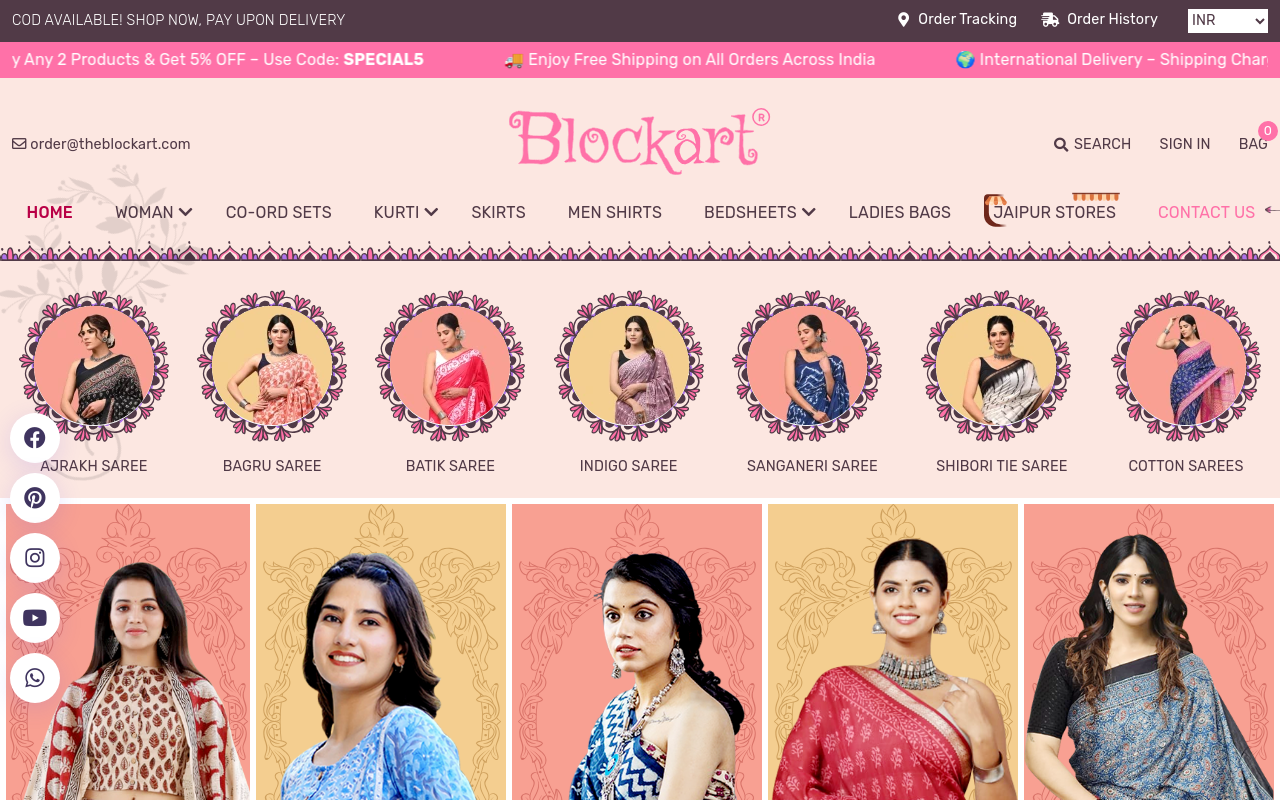 Best For: A wide variety of authentic block-print ethnic wear and complete outfits.
The Block Art stands out as a primary destination for those who want to integrate traditional Rajasthani prints into their daily wardrobe without the complexity of sourcing raw fabric. Their platform is meticulously organized, featuring dedicated sections for Bagru and Sanganeri prints, which allows customers to filter by technique rather than just color or price. Whether you are searching for a lightweight Sanganeri cotton saree for summer or a bold, earthy Bagru suit for a formal event, their catalog offers a comprehensive selection that bridges the gap between heritage craft and contemporary fashion.
Pricing Summary
- Paid Plan: Items typically range from ₹1,500 – ₹5,000 per set or saree.
Pros:
- User-friendly website with dedicated craft-specific categories.
- High-quality ethnic ensembles, including sarees and unstitched suits.
- Frequent promotional offers and free shipping within India.
- Strong focus on authentic Jaipur-based craftsmanship.
Cons:
- Limited focus on selling raw, unstitched yardage by the meter.
- Inventory can fluctuate quickly due to the nature of artisanal production.
Visit Blockart
2. iTokri
 Best For: An expansive, fair-trade marketplace that champions rural artisan communities.
iTokri is more than just an online store; it is a movement. For those who value the story behind the fabric as much as the fabric itself, iTokri provides an unparalleled experience. They function as a curated marketplace that sources directly from craft villages across India, with a significant portion of their collection dedicated to the block-printed traditions of Rajasthan. When you browse their Bagru and Sanganeri sections, you are often provided with context regarding the artisan group that created the piece, fostering a connection between the creator and the consumer.
Pricing Summary
- Paid Plan: Items typically range from ₹800 – ₹6,000.
Pros:
- Deep commitment to fair-trade and ethical sourcing.
- Extensive variety of craftsmanship styles and fabric types.
- Transparent communication about artisan origins.
- Global shipping options for international customers.
Cons:
- Price points are generally higher due to the fair-trade premium.
- High demand often leads to rapid stock depletion of popular items.
Visit iTokri
3. The Indian Ethnic Co.
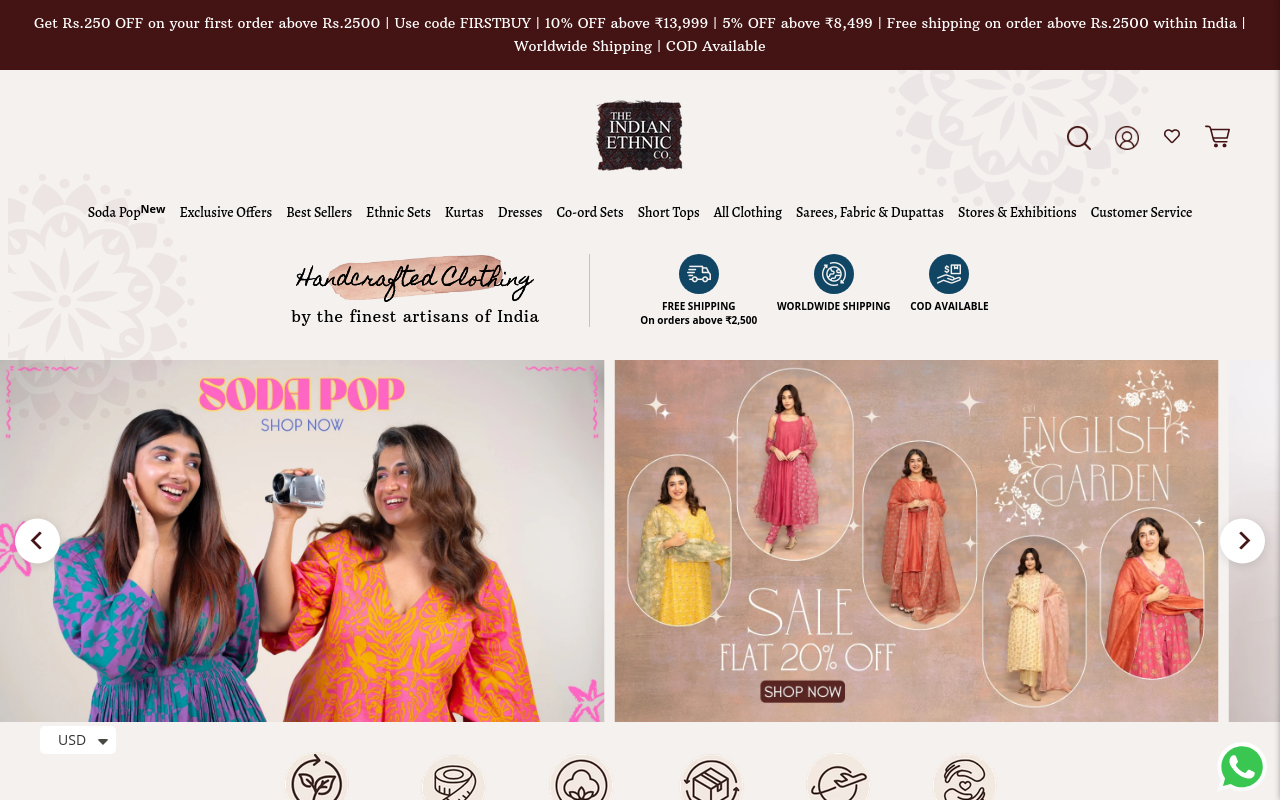 Best For: Premium, boutique-style collections with a focus on sophisticated design.
The Indian Ethnic Co. has carved out a niche for itself as a premium destination for those who want their block prints to make a fashion statement. Their approach to Bagru and Sanganeri prints is highly curated; they don't just sell fabric, they sell a specific lifestyle aesthetic. Each collection feels like a boutique release, with carefully selected color palettes and modern silhouettes that redefine how traditional Indian textiles are worn. If you are looking for a piece that feels special, high-end, and thoughtfully designed, this is the destination.
Pricing Summary
- Paid Plan: Ensembles typically start from ₹3,000 and can exceed ₹10,000.
Pros:
- Sophisticated, boutique-style aesthetic that stands out.
- Superior fabric quality and construction.
- Highly curated collections that feel like artistic releases.
- Excellent for festive and occasion-based ethnic wear.
Cons:
- Higher price point compared to mass-market retailers.
- Smaller, limited-edition batches mean items sell out quickly.
Visit The Indian Ethnic Co.
4. Bagrustore
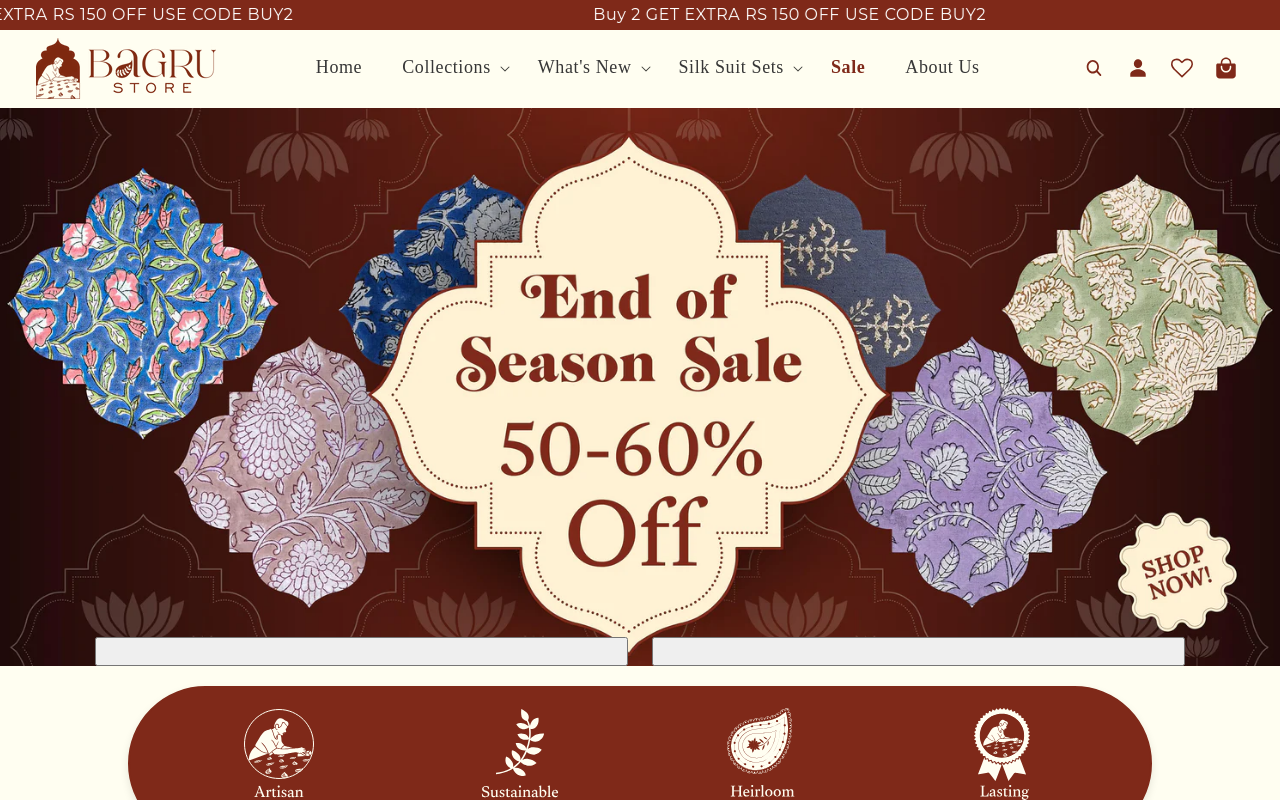 Best For: Specialized, authentic Bagru textiles that honor traditional mud-resist techniques.
As the name implies, Bagrustore is a specialist. While many online retailers offer a mix of various Indian crafts, Bagrustore focuses heavily on the specific heritage of the Bagru village. This specialization is a major advantage for buyers who are looking for the "real deal" specifically, the traditional black, maroon, and indigo prints that use natural dyes and mud-resist (dabu) techniques. By narrowing their focus, they have become experts in the nuances of Bagru printing, ensuring that their collection adheres to the historical standards of the craft.
Pricing Summary
- Paid Plan: Items typically range from ₹1,200 – ₹4,500.
Pros:
- Deep specialization in the Bagru craft tradition.
- Focus on authentic mud-resist (dabu) and natural dyeing techniques.
- Educational approach to product descriptions.
- Reliable quality control regarding traditional motifs.
Cons:
- Niche focus may limit the variety of other print styles.
- Slower production cycles due to traditional, non-mechanized methods.
Visit Bagrustore
5. Matkatus
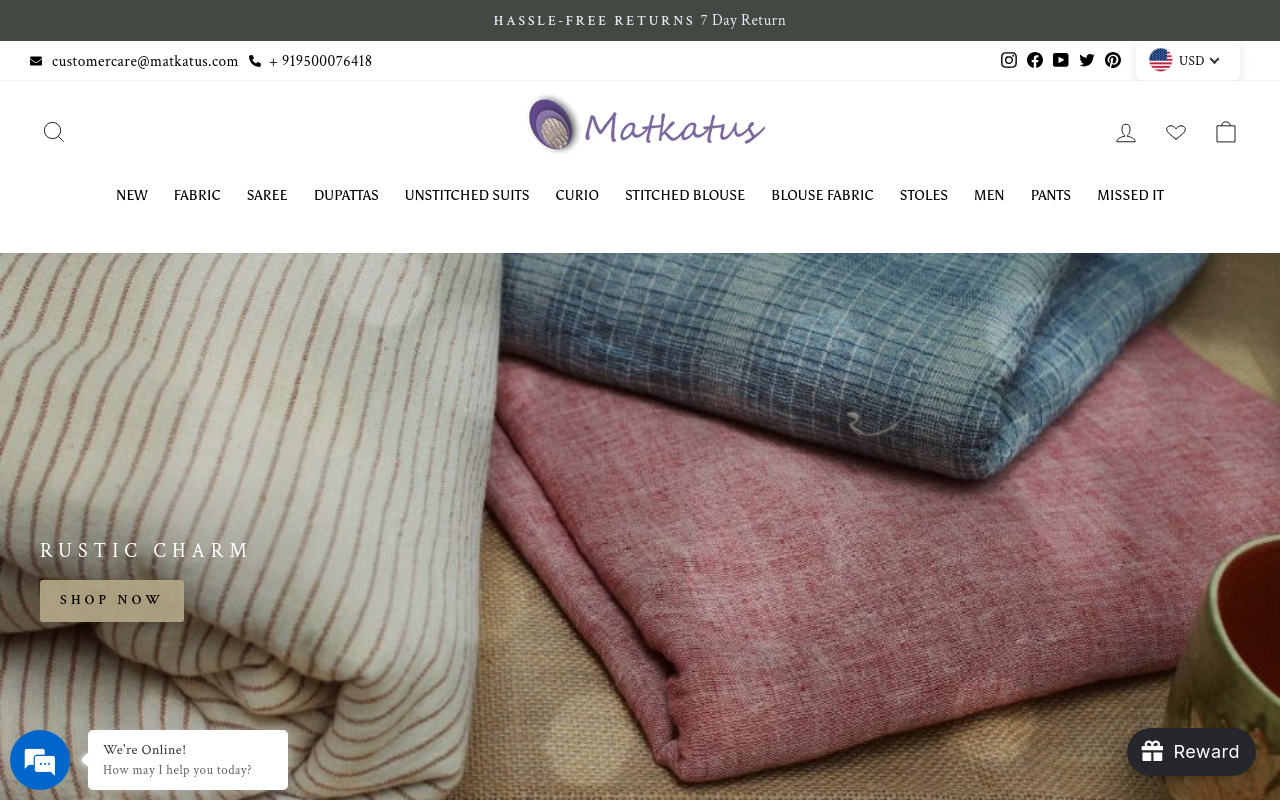 Best For: Affordable, diverse cotton block-print fabrics for DIY and bulk projects.
Matkatus is the go-to destination for the hobbyist, the DIY enthusiast, and the budget-conscious shopper. Unlike boutique retailers that focus on finished garments, Matkatus provides a massive, sprawling catalog of raw fabric by the meter. This makes them the ultimate resource for someone who wants to design their own kurtas, dresses, or home decor items using authentic Bagru and Sanganeri prints. Their inventory is vast, ranging from soft mulmul (muslin) to durable cambric cotton, ensuring that you can find the perfect weight and texture for your specific project.
Pricing Summary
- Paid Plan: Fabrics typically range from ₹200 – ₹800 per meter.
Pros:
- Extensive catalog of raw, unstitched fabric by the meter.
- Very competitive pricing for bulk and individual buyers.
- Wide range of fabric types, from mulmul to silk-cotton.
- Ideal for DIYers and independent designers.
Cons:
- Website interface is utility-focused and less "boutique" than others.
- Less emphasis on pre-stitched, designer-style ensembles.
Visit Matkatus
6. DMAASA
 Best For: Eco-conscious shoppers who prioritize sustainability and natural dyeing.
DMAASA represents the intersection of ancient art and modern environmental ethics. In an industry where chemical dyes are often used to speed up production, DMAASA remains committed to the traditional use of natural, plant-based pigments. Their Bagru and Sanganeri prints are produced with a deep respect for the environment, often utilizing pomegranate, indigo, and madder root to create their signature color palettes. For the shopper who is concerned about the carbon footprint of their clothing and the safety of the chemicals used in production, DMAASA is the gold standard.
Pricing Summary
- Paid Plan: Items typically range from ₹2,500 – ₹7,000 per piece.
Pros:
- Strict commitment to natural, non-toxic dyes and sustainable processes.
- High-quality, organic-feeling fabrics.
- Strong focus on slow fashion and environmental ethics.
- Authentic, artisanal aesthetic that feels truly heritage-based.
Cons:
- Higher price point due to the labor-intensive natural dyeing process.
- Longer lead times for certain collections.
Visit DMAASA
7. Srishti Textile
 Best For: Wholesale, bulk sourcing, and direct manufacturer pricing.
Srishti Textile operates as a direct manufacturer and supplier, making them the most practical choice for those looking to purchase in larger quantities. If you are a tailor, a small boutique owner, or someone looking to source fabric for a large-scale project, Srishti Textile offers the best value for money. By cutting out the middleman, they provide access to high-quality Bagru and Sanganeri fabrics at prices that are difficult to match elsewhere. Their business model is built on efficiency and volume, which is reflected in their expansive and well-organized product catalog.
Pricing Summary
- Paid Plan: Wholesale prices typically range from ₹150 – ₹600 per meter.
Pros:
- Direct manufacturer pricing, making them excellent for bulk orders.
- Consistent supply and reliable quality control for larger quantities.
- Wide variety of traditional prints and fabric bases.
- Ideal for tailors, small business owners, and designers.
Cons:
- Less focus on individual, one-off designer garments.
- Customer service is geared toward wholesale communication.
Visit Srishti Textile
Understanding the Craft: Bagru vs. Sanganeri
To truly appreciate the stores listed above, it helps to understand the fundamental differences between these two iconic Rajasthani printing styles. While both rely on the skill of the block printer, their visual languages are distinct.
Bagru printing is defined by its rustic, earthy aesthetic. The process often utilizes Dabu, a mud-resist technique that prevents dye from penetrating specific parts of the fabric, allowing for complex, layered patterns. The color palette is restricted to nature’s bounty: deep indigos, terracotta maroons, and charcoal blacks, usually set against an off-white or cream-colored base. These prints are often bold, geometric, and carry a weight that feels substantial and grounded.
Sanganeri printing, by contrast, is the epitome of delicacy. Originating from the town of Sanganer, this style is famous for its intricate, fine-lined floral motifs. Artisans use a wider range of colors, often incorporating bright hues like turquoise, magenta, and leaf green, typically printed on a crisp white or light-colored background. The patterns are frequently more floral and botanical, reflecting the elegance of Mughal-inspired art. When shopping, identifying these differences will help you choose the right store; if you want bold, earthy, and rugged, look for Bagru specialists. If you want floral, delicate, and vibrant, seek out Sanganeri experts.
Authenticity Indicators
In a market flooded with screen-printed replicas, identifying authentic block prints is a vital skill. Machine-made prints are created using rollers or digital screens, resulting in perfect, repeating patterns. If you look closely at a machine-printed fabric, the alignment will be flawless, and the ink will be absolutely uniform.
Authentic hand-block printing, however, is a human process. Because the artisan manually stamps each block onto the fabric, you will almost always find slight variations. Look for the "human touch":
- Alignment: A slight overlap or a tiny gap where the block was placed down.
- Color Saturation: Minor variations in the depth of the color, as the amount of dye on the block changes with each impression.
- The Backside: In genuine block prints, the color often bleeds through to the reverse side of the fabric, whereas machine-printed fabrics usually have a stark, unprinted back.
- Texture: Block-printed fabrics often have a tactile quality where the ink sits slightly on top of the fibers, unlike digital prints which are absorbed into the synthetic fibers.
Frequently Asked Questions
What is the main difference between Bagru and Sanganeri prints?
The primary difference lies in the technique and the resulting aesthetic. Bagru prints are known for their bold, earthy tones like black, maroon, and indigo, often using mud-resist techniques on off-white backgrounds. Sanganeri prints are characterized by intricate, delicate floral designs, usually featuring a wider array of colors on white or light-colored cotton, reflecting a more graceful and refined aesthetic.
How can I tell if a block print is authentic or screen-printed?
Authentic hand block prints are defined by their subtle irregularities. You should look for slight misalignments in the pattern or variations in the intensity of the dye, which occur because each stamp is applied by hand. Screen-printed or machine-made fabrics will have a perfectly uniform, repetitive pattern that lacks the organic variation found in human-made textiles.
Is it safe to wash hand block-printed fabrics at home?
Yes, but they require a gentle hand. For the first few washes, it is highly recommended to hand wash the fabric in cold water using a mild, pH-neutral detergent. This is especially important for natural-dyed fabrics, which may bleed excess pigment during the initial wash. Avoid wringing the fabric or using harsh chemical bleaches, and always dry them in the shade to preserve the vibrancy of the colors.
Why do some stores cost more than others?
Price variations usually reflect the supply chain and the production philosophy. Stores that invest in fair-trade practices, pay artisans a living wage, and use expensive, eco-friendly natural dyes will naturally have higher price points. These costs ensure that the craft remains sustainable and that the artisans are fairly compensated, whereas cheaper options often rely on mass production, synthetic chemicals, or lower-quality fabric bases.
What should I consider before buying fabric for a dress or suit?
Before purchasing, consider the weight and drape of the fabric. Mulmul (muslin) is incredibly lightweight and breathable, perfect for summer, while cambric or heavy cotton is better for structured outfits. Always check the width of the fabric provided by the store, as this determines how much yardage you need for your specific pattern. If you are ordering online, it is also wise to order a small swatch first if you are unsure about the fabric texture or the true color in natural light.